


Embassy Attestation Service in Bangalore | True Attestation
When you are planning to work, study, start a business, join family members, or relocate to another country, your documents may need to be officially verified and legalized. This is where an embassy attestation service becomes important.
Many foreign countries require Indian-issued documents to go through a specific authentication and legalization process before they can be accepted for visa, employment, education, residency, immigration, or other official purposes. The exact process depends on the destination country, the type of document, and the requirements of the concerned embassy or authority.
Understanding every step can sometimes be confusing. Educational certificates may require verification from the relevant authorities, personal documents may follow a different process, and commercial documents can have their own legalization requirements. A professional embassy attestation service can help customers understand the applicable process and organize their documentation accordingly.
True Attestation provides customer assistance for people looking for embassy attestation, certificate attestation, document authentication, MEA attestation, apostille support, and related documentation services in Bangalore.
If you need guidance regarding document legalization for international use, contact True Attestation and discuss your specific document and destination country requirements.
Call Us Now: +91-9380152536
What Is Embassy Attestation?
Embassy attestation is a document authentication or legalization process in which documents may be verified through the required authorities and, where applicable, authenticated by the embassy or diplomatic mission of the destination country.
In simple terms, the process helps establish that a document issued in one country is properly authenticated for official use in another country.
For example, a degree certificate issued in India may need to be authenticated before it is submitted to an employer or government authority in another country. Similarly, a marriage certificate, birth certificate, commercial document, or other personal document may need legalization depending on the destination country’s requirements.
The embassy attestation process may involve multiple stages. Depending on the document and destination country, these stages can include verification by the issuing authority or relevant state department, MEA attestation, and embassy or consular legalization.
Because the requirements are not identical for every country, it is important to check the correct procedure before submitting documents.
A professional document attestation service can provide guidance on the documentation process and help customers understand which authorities or stages may apply.
Why Is Embassy Attestation Required?
Embassy attestation is commonly required when documents issued in India need to be presented to foreign employers, universities, government departments, immigration authorities, or other official organizations.
Employment Abroad
People moving overseas for employment may need their educational certificates, professional qualifications, or other personal documents authenticated. Employers or authorities in the destination country may request properly attested documents as part of employment or visa procedures.
Higher Education
Students applying to foreign universities or educational institutions may need academic certificates and other supporting documents authenticated according to the destination country’s requirements.
Family or Dependent Visas
Marriage certificates, birth certificates, and other relationship documents may be required for family visa or dependent visa applications. The relevant authority may ask for legalized or authenticated documents.
Business Purposes
Companies involved in international business may require embassy document legalization for commercial documents, agreements, certificates, or other business-related paperwork.
Immigration
Immigration and residency procedures may require authenticated personal and educational documents. Requirements can vary significantly depending on the country and the type of application.
Residency Applications
Some countries require document authentication as part of residency or long-term visa procedures. It is important to verify the latest requirements with the appropriate authority or embassy.
A reliable embassy attestation service can help you understand the process applicable to your particular situation.
Types of Documents for Embassy Attestation
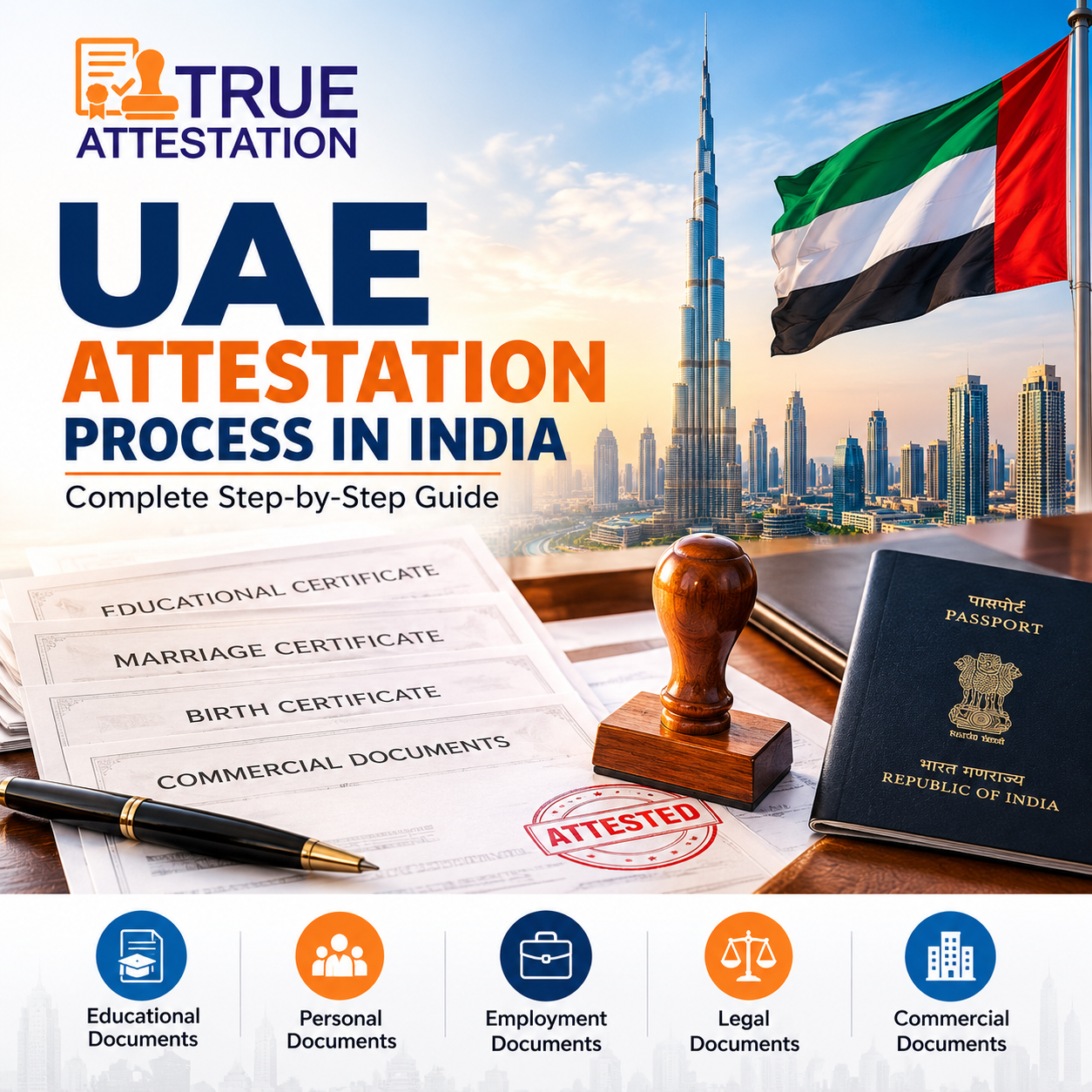
Different documents can have different verification and legalization procedures. Some commonly submitted categories include the following.
Educational Certificates
Educational documents may include:
- Degree certificates
- Diploma certificates
- School certificates
- Mark sheets
- Professional qualification certificates
- Technical certificates
The required process may depend on the institution, issuing authority, destination country, and purpose of submission.
Degree Certificates
Degree certificates are commonly required for overseas employment, higher education, professional licensing, and other official purposes.
The process for embassy certificate attestation may involve verification through relevant authorities before the document is submitted for the next stage of authentication.
Marriage Certificates
Marriage certificates may be required for:
- Family visas
- Dependent visas
- Residency applications
- Immigration procedures
- Family-related legal requirements
Birth Certificates
Birth certificates may be required for children’s visas, school admissions, immigration applications, family residency, and other official procedures.
Commercial Documents
Businesses may require authentication or legalization for documents such as:
- Certificates of incorporation
- Commercial agreements
- Business contracts
- Invoices
- Export-related documents
- Company certificates
- Authorization documents
Commercial document requirements can differ from personal and educational document procedures.
Personal Documents
Other personal documents may also require authentication depending on the destination country’s rules and the purpose of submission.
Before beginning the process, it is useful to discuss the document type, destination country, and intended purpose with a professional document authentication service provider.
Understanding the Embassy Attestation Process
The embassy attestation process can involve several stages. However, there is no single procedure that applies to every document or country.
The process generally depends on:
- Destination country
- Type of document
- Purpose of attestation
- Issuing authority
- Current embassy requirements
- Applicable government procedures
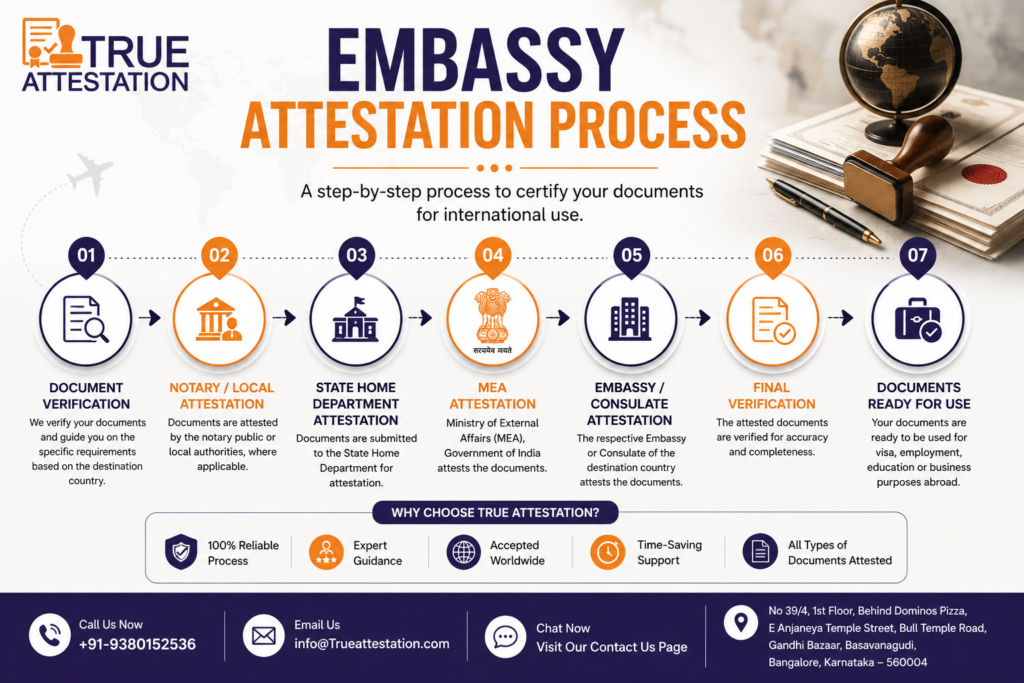
A general process may include the following stages.
-
Document Review
The document is first reviewed to understand its type and intended use. Customers may need to provide information about the destination country and purpose of attestation.
-
Verification by Relevant Authorities
Depending on the document, verification may be required from the issuing institution, state-level department, chamber, or other competent authority.
-
MEA Attestation
For certain embassy legalization procedures, authentication through the Ministry of External Affairs may be part of the required process.
The exact role of MEA attestation depends on the applicable document and destination country requirements.
-
Embassy or Consular Legalization
After required prior authentication stages are completed, documents may be submitted for embassy or consular attestation where applicable.
-
Additional Requirements
Some countries may have additional requirements or a different procedure. Certain documents may require translation, supporting records, or other documentation.
Because requirements can change, customers should always verify the applicable procedure for their destination country and document type.
A professional embassy attestation service can help coordinate information and provide guidance throughout the documentation process.
Apostille and Embassy Attestation: What Is the Difference?
Many people are confused about the difference between apostille and embassy attestation.
Although both processes relate to international document authentication, they are not the same.
What Is an Apostille?
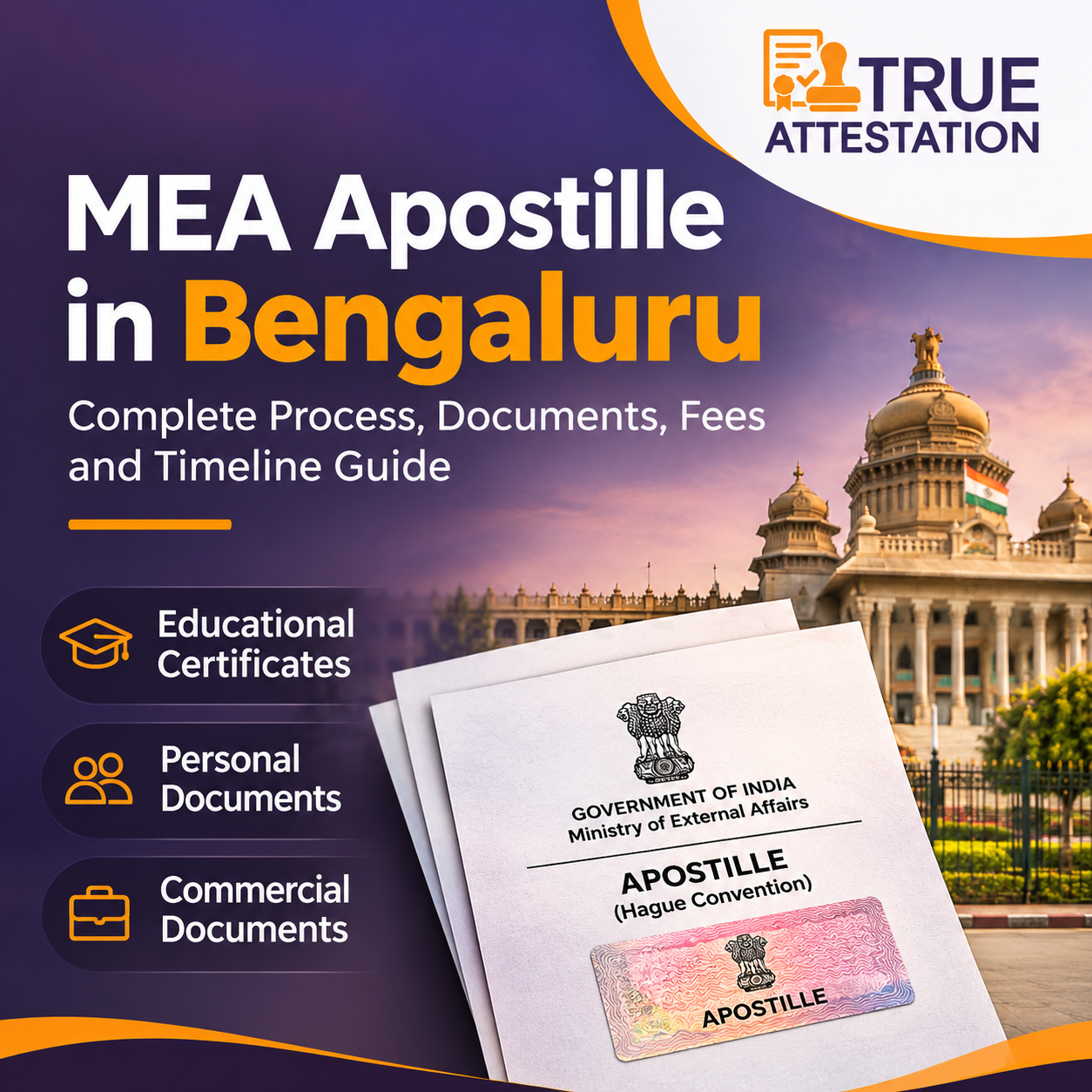
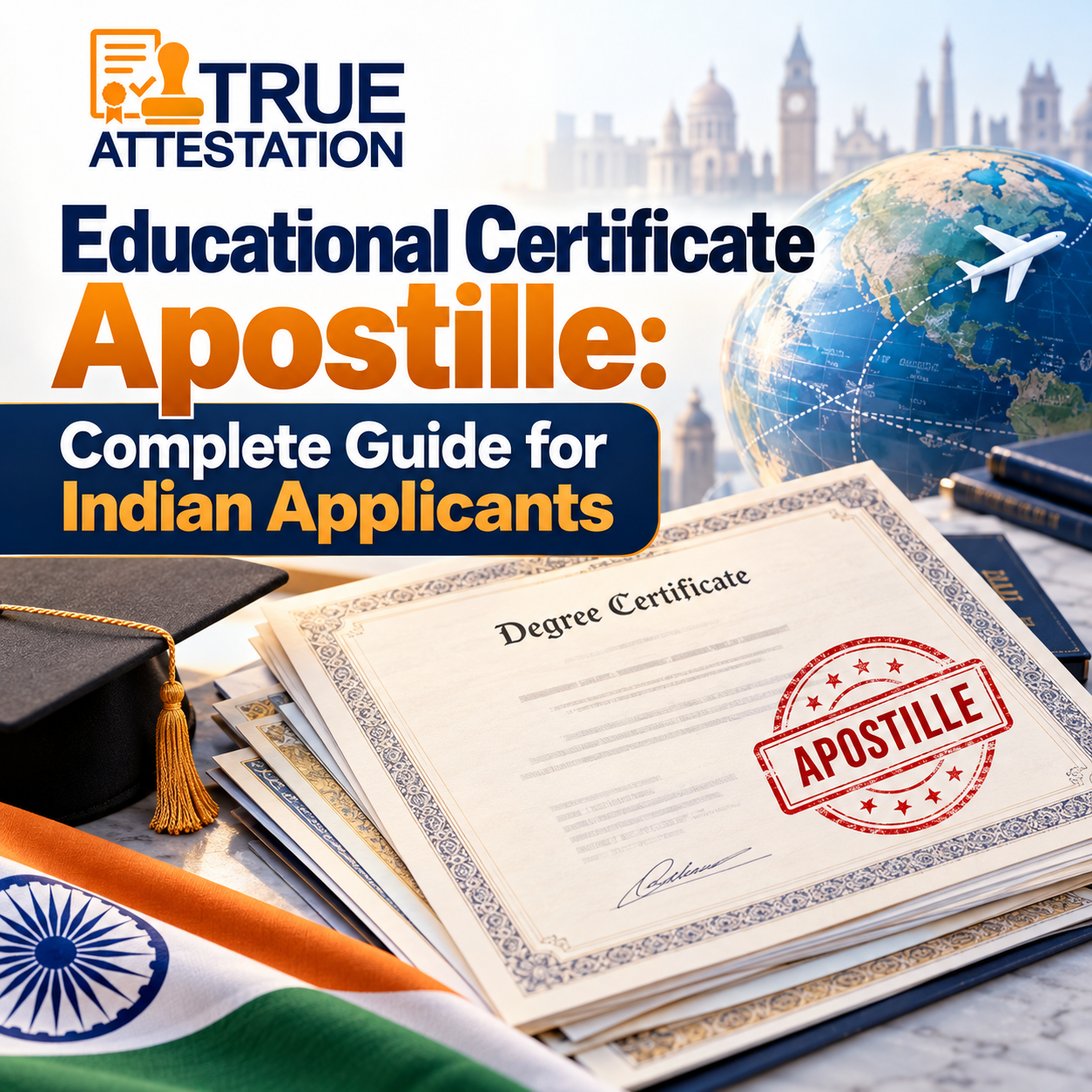
An apostille is a certificate used for documents intended for countries that participate in the Hague Apostille Convention.
In applicable cases, an apostille can eliminate the need for further embassy legalization. However, whether apostille is sufficient depends on the destination country and the purpose for which the document is being submitted.
What Is Embassy Attestation?
Embassy attestation or embassy legalization generally involves authentication through the diplomatic or consular authority of the destination country when required.
Simple Comparison
Apostille may apply when:
- The destination country accepts Hague Apostille Convention documents.
- The relevant document qualifies for apostille.
- The receiving authority accepts apostille authentication.
Embassy attestation may apply when:
- The destination country requires embassy or consular legalization.
- The document needs authentication for a non-apostille procedure.
- Specific embassy requirements apply.
The best approach is to identify the destination country first and then determine whether apostille and embassy attestation procedures apply to your document.
True Attestation can provide guidance based on the document details and intended destination.
Why Choose Professional Embassy Attestation Services?
Handling international document legalization without understanding the required procedure can lead to unnecessary confusion. Professional support can make the process easier to understand.
Guidance on Documentation Requirements
Different documents require different supporting records and authentication stages. Professional assistance can help customers understand what may be required.
Reduced Paperwork Confusion
International documentation procedures can involve multiple authorities. Clear guidance can help reduce uncertainty about the next steps.
Process Coordination
A professional embassy attestation service can help customers understand how different stages of the process are connected.
Time-Saving Support
Instead of trying to understand every requirement independently, customers can discuss their document and destination requirements with an experienced service provider.
Customer Updates and Assistance
Customers may have questions about their documents, required stages, or general progress. Professional customer assistance helps provide clarity during the process.
It is important to remember that professional assistance does not change embassy or government requirements. Final procedures, acceptance, processing times, and requirements remain subject to the concerned authorities.
Embassy Attestation Service in Bangalore
Bangalore is home to professionals, students, entrepreneurs, and families with international travel and relocation requirements. As a result, many people search for embassy attestation services in Bangalore when preparing documents for overseas use.
Whether you are planning to:
- Accept an overseas job
- Apply for higher education
- Move abroad with your family
- Submit documents for immigration
- Apply for residency
- Complete business documentation
it is important to understand the applicable document authentication procedure.
A local embassy attestation service in Bangalore can make it easier to discuss your documents directly and understand the steps involved.
True Attestation provides assistance from its Bangalore location for customers seeking guidance regarding certificate attestation, document authentication, embassy legalization, apostille-related requirements, and other document support services.
Visit True Attestation
No 39/4, 1st Floor, Behind Dominos Pizza, E Anjaneya Temple Street, Bull Temple Road, Gandhi Bazaar, Basavanagudi, Bangalore, Karnataka – 560004
Before visiting, customers can call and discuss their document type and destination country requirements.
Call: +91-9380152536
Why Choose True Attestation?
Choosing the right support provider is important when your documents are needed for international purposes.
True Attestation focuses on providing clear customer assistance for document-related requirements.
Professional Customer Support
Customers can discuss their document type, destination country, and intended purpose before proceeding with the process.
Guidance Based on Requirements
Document requirements may differ depending on whether the document is educational, personal, commercial, or another category.
Support for Different Document Categories
Customers can seek information regarding:
- Educational certificate attestation
- Degree certificate attestation
- Marriage certificate attestation
- Birth certificate attestation
- Commercial document legalization
- MEA attestation
- Apostille and embassy attestation requirements
Convenient Bangalore Location
True Attestation is located in Basavanagudi, Bangalore, making it convenient for customers who prefer local assistance.
Clear Communication
Document attestation requirements can sometimes be complicated. Clear communication helps customers understand the process and required documentation.
True Attestation does not make unrealistic promises regarding approvals or processing speed. Processing times and requirements can vary based on the country, embassy, document type, and applicable authorities.
How to Get Started With Your Embassy Attestation Requirements
Getting started is simple.
Step 1: Contact True Attestation
Call:
You can discuss your document type and destination country requirements.
Step 2: Explain Your Requirement
Share relevant details, such as:
- Destination country
- Document type
- Purpose of attestation
- Number of documents
- Any specific instructions received from an employer, university, embassy, or authority
Step 3: Understand the Applicable Process
The team can provide guidance about the possible authentication and attestation requirements applicable to your documents.
Step 4: Prepare Your Documents
You may need to provide original documents, copies, identification documents, supporting records, or other materials depending on the process.
Step 5: Follow the Required Procedure
The documentation process can then proceed according to applicable requirements.
Contact True Attestation
Phone: +91-9380152536
Email: info@Trueattestation.com
Frequently Asked Questions About Embassy Attestation
-
What is embassy attestation?
Embassy attestation is a document authentication or legalization process that may be required when Indian-issued documents need to be officially accepted in another country. The exact procedure depends on the destination country and document type.
-
Which documents require embassy attestation?
Documents can include educational certificates, degree certificates, marriage certificates, birth certificates, commercial documents, and other personal records. Requirements vary depending on the purpose and destination country.
-
How long does the embassy attestation process take?
Processing time can vary based on the document type, destination country, required verification stages, embassy procedures, and other applicable factors. It is best to discuss your specific requirement before estimating a timeline.
-
What is the difference between apostille and embassy attestation?
An apostille is generally used for documents intended for countries that accept the Hague Apostille Convention. Embassy attestation or legalization may be required for other destinations or when specific embassy procedures apply.
-
Can I get embassy attestation in Bangalore?
Yes. Customers in Bangalore can seek professional assistance and guidance for embassy attestation requirements through True Attestation.
-
What documents are required for embassy attestation?
Required documents depend on the certificate type, destination country, and purpose. Original certificates, copies, identification documents, supporting records, or additional forms may be required in certain cases.
-
Is embassy attestation required for all countries?
No. The requirement depends on the destination country and its document legalization rules. Some countries may accept apostille documents, while others may require embassy legalization or other authentication procedures.
-
Is MEA attestation required before embassy attestation?
In some cases, MEA authentication may be part of the required procedure before embassy or consular legalization. The exact requirement depends on the document and destination country.
-
Can commercial documents be legalized through an embassy attestation process?
Commercial documents may require a separate authentication and legalization procedure. The requirements can depend on the document type, destination country, and intended business purpose.
-
How can I contact True Attestation?
You can contact True Attestation by calling +91-9380152536, emailing info@Trueattestation.com, or visiting the Bangalore office in Basavanagudi.

Conclusion: Get Professional Guidance for Your Embassy Attestation Service Requirements
International document procedures require careful attention because requirements can differ from one country to another. Whether you need educational certificate attestation, personal document authentication, commercial document legalization, MEA attestation, apostille support, or embassy certificate attestation, understanding the correct procedure is important.
A professional embassy attestation service can help you understand the documentation requirements and guide you through the applicable process.
True Attestation provides customer assistance for people in Bangalore who need support with embassy attestation and related document authentication requirements. Before starting, you can discuss your document type, destination country, and purpose to better understand the applicable procedure.
Phone: +91-9380152536
Email: info@trueattestation.com
Visit Us:
No 39/4, 1st Floor, Behind Dominos Pizza, E Anjaneya Temple Street, Bull Temple Road, Gandhi Bazaar, Basavanagudi, Bangalore, Karnataka – 560004
For guidance regarding your embassy attestation service requirements, contact True Attestation today and discuss the documentation process based on your destination country and document type.